
GreenEDU second newsletter
September 2025
Introduction
GreenEDU implementation activities and other relevant events aim to support HE (Higher Education) educators and students in developing green and digital skills that will allow them to participate in the green economy once they graduate, which will allow them to fight environmental degradation. Finally, promotional activities and 4 events will be organized to further disseminate the project and its results. GreenEDU is co-funded by the Erasmus+ program of the European Union.
Get in touch with us to know more! Check out our website here

Cofinancé par l'Union Européenne. Les points de vue et opinions exprimés sont toutefois ceux des auteurs uniquement et ne reflètent pas nécessairement ceux de l'Union Européenne ou de la Fondation pour le Développement du Système Éducatif (FRSE). Ni l'Union Européenne ni la FRSE ne peuvent en être tenues responsables.
Partners Spotlight
VIVES
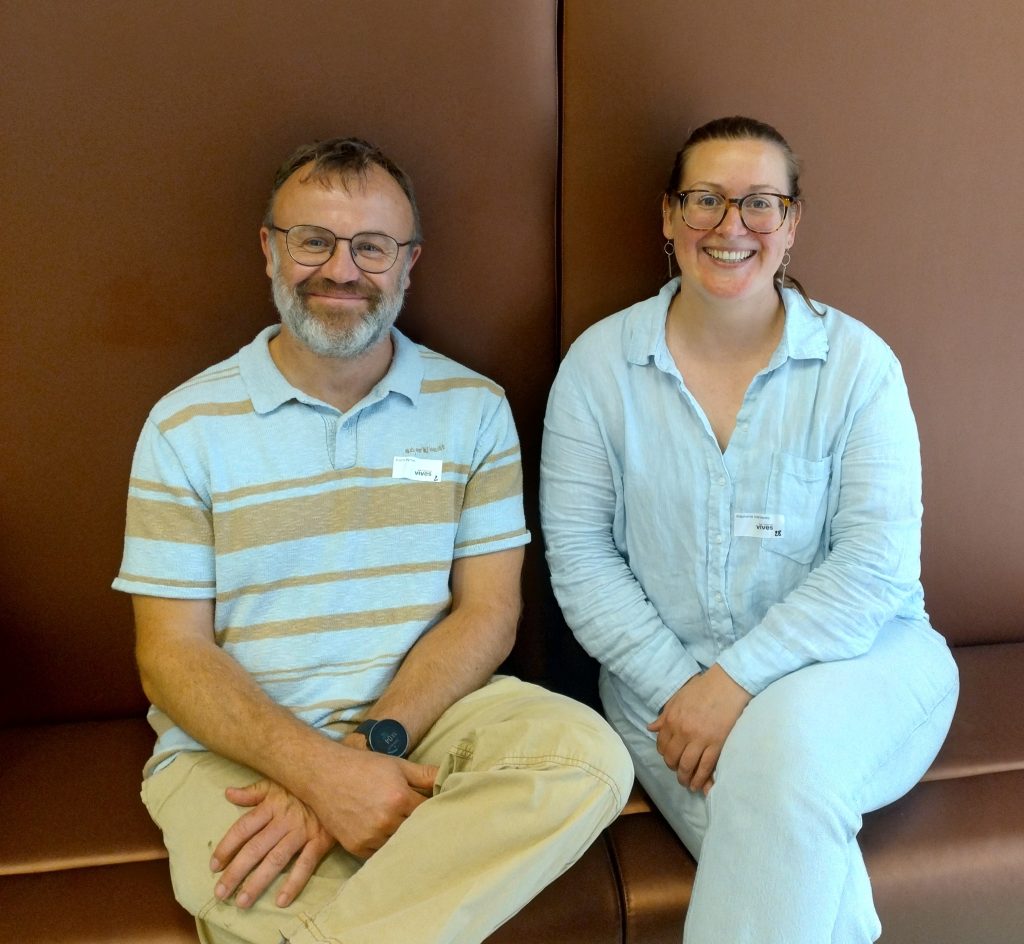
VIVES is one of the largest Universities of Applied Sciences in Flanders, Belgium. With campuses across West Flanders, VIVES offers a wide range of professional bachelor programmes and is strongly committed to applied research, innovation, and development. Its Educational Technology research group focuses on the meaningful integration of digital tools in teaching and learning. In the GreenEDU project, VIVES takes the lead on Work Package 3: GreenEDU AR Technology Curriculum. This work package focuses on empowering higher education educators to embed green and digital skills into their curricula using Mobile Augmented Reality Games (MARG). The team at VIVES ensures that the use of Augmented Reality is a purposeful pedagogical tool that fosters experiential learning, critical thinking, and sustainability awareness.
Key activities led by VIVES include:
- Designing and testing AR learning units that target green skills development across disciplines
- Coordinating co-creation sessions with HE educators to align AR use with learning objectives
- Developing guidelines and toolkits for the effective integration of AR into existing courses
- Leading pilot implementations and gathering feedback from students and staff
- Contributing to the broader GreenEDU learning design framework through case examples and best practices
Event Highlights
Second official meeting
Our 2nd online meeting took place on 07/05/2025, hosted by the project’s lead partner Lodz University of Technology, Poland (TUL). Where all the partners presented their work packages and updates on the progress.

Work in progress
Currently, the partners are working on carrying out the activities of Work Package (WP) 2. This WP includes establishing a national committee in each of the partner countries, developing the GreenEDU Strategy document to guide the project, developing the content of an e-Toolkit to be used as a guide for Higher Education staff and educators, as well as carrying out primary research in the form of focus groups, and secondary research in the form of desk research for each country.
e-Toolkit
The content of the e-Toolkit has already been mostly completed, and now partners are working to finalize it and present it in one clear document. Each partner was responsible for the development of one section of the e-Toolkit, which for example could include best practices from Higher Education Institutions in Europe on integrating sustainability in curricula as well as AR tools, or the needs for educators to be able to adequately develop their curricula. This has now come to life and is in the process of being finalized.
The Desk Research part of this WP includes research on the current state of integration of green aspects in Higher Education curricula, related policies that may affect these actions, and some examples of successful implementations. Each partner from each country has produced one national research report for this topic, and now UNIC is in the process of summarizing some of the main findings of the reports from each partner.
Desk research
Focus groups
The field research activity consists of focus groups. These focus groups help the partners dive deeper into the needs of the HE educators and staff in order to identify and establish specific items for incorporation into the strategy, with regard to how AR technology is being used and how it will be used by these educators, given the changing labour market in the green economy. The focus group contains the project’s target audience, such as: HE staff, HE educators, Education Decision and Policy-Makers, SDG groups, STEM education, Business education, HEI, and VET trainers.